
Key Takeaways
- Building a company wellness program pilot in phases allows companies to test wellness initiatives on a smaller scale, gather real data, and scale only what proves effective.
- Clear communication, aligned incentives, and embedded evaluation are essential to drive participation and meaningful outcomes in a pilot.
- Scaling a program requires a structured roadmap, leadership support, governance, aligned resources, and monitoring of key performance metrics.
- Reviewing lessons learned, identifying pivot points, and sharing insights across the organization ensures continuous improvement and reduce risk in future wellness initiatives.
Building a company wellness program doesn’t always require launching a comprehensive initiative across the entire organization at once. A wellness program pilot allows employers to test an idea with a smaller employee population, gather feedback and performance data, and determine what should be improved before expanding the program.
Piloting can be especially valuable when introducing a new wellness initiative, testing an engagement strategy, evaluating technology, or determining whether a program can support a larger and more diverse employee population.
This guide explains how to design a company wellness program pilot, establish success criteria, encourage employee participation, evaluate results, and decide when an initiative is ready to scale.
For a broader overview of program design, implementation, engagement, measurement, and technology, explore our comprehensive guide to building a company wellness program.
When Should You Pilot a Company Wellness Program?
Not every wellness initiative requires a pilot. Organizations may benefit from piloting a program when the initiative requires significant investment, introduces new technology or services, targets a new employee population, or relies on assumptions about employee participation and outcomes that have not yet been tested.
A pilot can also be useful when an organization wants to compare different approaches before committing to a broader rollout. For example, an employer might test different communication strategies, incentive structures, wellness challenges, or program experiences with smaller employee groups.
Piloting is less useful when the organization already has strong evidence that an initiative is needed, implementation risks are low, or delaying broader access would unnecessarily prevent employees from receiving valuable resources.
The purpose of a pilot is not simply to start small. It is to reduce uncertainty and generate information that helps the organization make better decisions about future investment and program design.
How to Design a Wellness Program Pilot
Every strong pilot program starts with a clear hypothesis, a concrete expectation driving how and why it should happen. For example: “If we offer 10-minute mindfulness breaks, we’ll reduce stress scores by 15% over two months.”
Follow these 6 key steps:
Step 1: Select a Cohort
Selecting a specific group, such as one department, region, or job level, makes it easier to isolate the effects of the pilot, controlling for variables like workload or role that could skew results.
Step 2: Set a Timeline
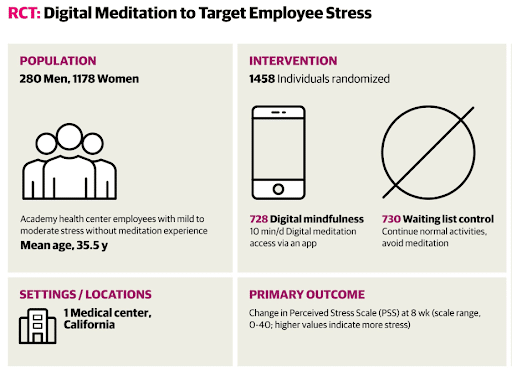
Establish a timeline (e.g., 8–12 weeks), giving the initiative enough time to show real effects without dragging on indefinitely. This duration is usually perfect to deliver success. For example, a 2025 randomized trial of 1,458 employees at a large academic medical center found that an 8-week digital mindfulness program significantly reduced perceived stress, and the effects remained for four months after the pilot.
Step 3: Establish Success Criteria for Launch
Measure outcomes such as participation rate, changes in mental health (through employee surveys), absenteeism, productivity, or similar metrics. Having these criteria in place ensures that at the end of the pilot, you’ll be able to judge objectively whether it worked or not.
Step 4: Document Baseline Data
It’s essential to know where you stand by recording baseline data before the pilot. Without these measurements, you won’t be able to evaluate impact effectively.
Step 5: Identify Constraints and Risks
Outline constraints and risks ahead of time, such as budget limits, technological challenges, or the risk that participants burn out or disengage. Identifying them early helps mitigate or plan around problems.
Step 6: Decide the “Go/No-Go” Triggers
Define upfront what will constitute a go or no-go decision for scaling the project. That means defining the thresholds that would count as success, and the red flags for expanding.
Communicating, Incentivizing, and Evaluating the Pilot
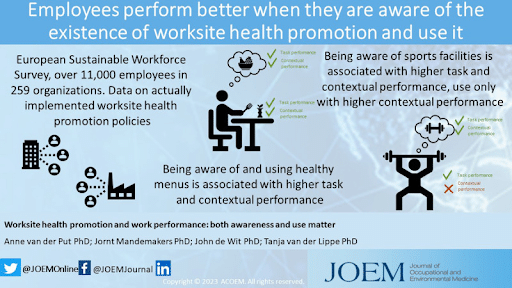
Garnering employee participation in a pilot often hinges on how you communicate, the incentives you set, and how evaluation is embedded from day one. A work health awareness study in 2024 found that awareness of a workplace health promotion (WHP) program and actual use of it in companies were positively associated with task and contextual performance.
Start by developing a communication plan that includes a launch announcement via email or meeting, regular reminders, progress updates, and storytelling to make the initiative relatable. Next, select the incentives you’ll give. These perks should be aligned with the behaviors you want to encourage, whether through recognition, tangible rewards, or gamification.
To ensure meaningful results, address data collection accuracy at the baseline, mid-pilot, and post-pilot. Selecting the right evaluation methods is also critical, from surveys and usage analytics to biometric or behavioral data, depending on what you aim to measure. These evaluations create feedback loops that help monitor employee engagement and address issues promptly.
Transparency is key throughout the process. Ask for employee feedback, and clearly explain what the pilot entails and what participants can expect once it concludes, and be sure to outline clear steps in the pilot so the participants’ transition to a scaled program is clear.
How to Scale a Successful Wellness Program Pilot
Once your pilot delivers evidence, it’s time to scale. But scaling isn’t simply duplicating; it’s adapting, optimizing, and embedding for broader success.
- Review and document learnings from the pilot: Analyze what worked, what didn’t, and what adjustments are needed. Use these insights to inform future program design and avoid repeating mistakes.
- Build a roll-out roadmap: Outline phases, regions/departments, and timing, and assign clear roles and responsibilities. Include contingency plans to address potential challenges during each stage of the rollout.
- Drive momentum: Secure leadership buy-in and sponsorship to reinforce the program’s credibility and importance. Ensure leaders actively communicate support and model desired behaviors to sustain engagement.
- Define governance: Establish who oversees the program, which metrics are tracked, reporting processes, and mechanisms for continuous improvement. Clearly define decision-making authority to prevent delays or confusion during implementation.
- Align resources and infrastructure: Confirm that vendor contracts, communications plans, technology platforms, and measurement tools are in place. Ensure all resources are scalable and can support expansion without disruption.
- Monitor scaling KPIs: Track participation, engagement, behavior changes, cost savings, and ROI to evaluate success at each stage. Compare results against pilot benchmarks to detect trends and optimize performance.
- Embed continuous improvement loops: Treat the company wellness program as an evolving initiative rather than a fixed one. Regularly review feedback and data to refine interventions, making adjustments that maintain relevance and impact over time.
When to Improve, Expand, or End a Wellness Program Pilot
What every pilot inevitably teaches is that not everything goes as planned. Recognizing when to pivot is as important as choosing when to scale. For HR leaders, having a structured “lessons learned” process and decisiveness around pivot points is what separates successful scaling from failure.
First, define the criteria that will signal when to pivot and identify the prompts to change course. Next, identify engagement or outcome shortfalls early (e.g., low participation, no behavior change, cost overruns). Also, gathering feedback from participants, stakeholders, and data throughout the pilot will give early red flags. Not every issue can be fixed, so it is important to distinguish between what to address and what represents fundamental problems, such as a flawed hypothesis or a misaligned cohort.
Finally, documenting the lessons learned and sharing findings across the organization helps to build a knowledge base that can benefit future initiatives.
Build a Company Wellness Program That Can Evolve
A successful pilot can provide valuable insight into employee needs, participation barriers, program performance, and the resources required to scale.
CoreHealth provides wellness technology that organizations can use to launch initiatives, engage employees, manage wellness challenges and incentives, analyze program data, and support wellness programs as they grow.
Whether you’re testing a new wellness initiative or managing an established program across multiple employee populations, the right technology can make it easier to adapt your program based on what the data shows.
Learn more about designing the right employee wellness program with these articles from the CoreHealth blog:
Designing Roles for Well-Being: How to Build Jobs That Support Health
Creating Corporate Wellness Programs for Women
The Role of Benefits Consultants in Introducing Corporate Wellness Programs to Employers
