
Reducing stress at work starts with creating an environment that supports healthy habits, manageable workloads and a positive workplace culture. Organizations can help by encouraging exercise, supporting better time management, incorporating mindfulness, promoting work-life balance and creating a culture where people feel supported.
While some people thrive in demanding conditions, most need a healthy work environment to be productive. In the fast-paced rhythm of today’s workplace, stress is often unavoidable, and it can negatively impact employee health and performance. One Mental Health America survey reported that 81% of workers in stressful work environments say it affects their mental health.
Here are five practical strategies organizations can use to help reduce workplace stress and support employee well-being.
Understanding the Impact of Workplace Stress
The modern workplace is often characterized by high-pressure deadlines, demanding workloads, and constant connectivity, all of which contribute to elevated employee stress levels. Chronic stress affects individual well-being and has significant implications for organizational performance.
While we can’t always avoid stressful situations at work, the ability to stay calm under pressure is directly related to performance and well-being.
What Can Cause Harmful Workplace Stress?
Researchers have identified some behaviors that can contribute to a stressful work environment:
- Failure to address employees’ sense of equality and well-being.
- Ignoring employees’ suggestions and perspectives.
- Micromanagement and microaggressions.
- The perception of having little control while facing high expectations.
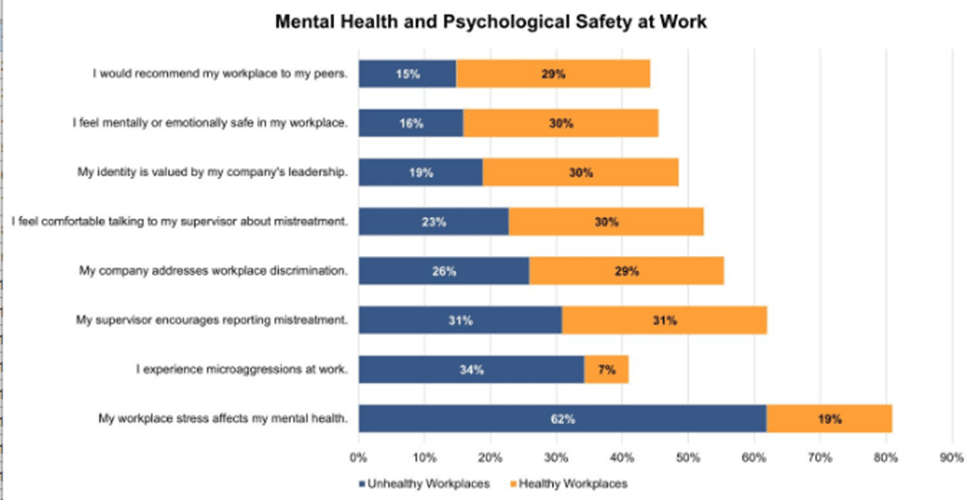
How Does Workplace Stress Affect an Employee’s Health?
A stressful work environment affects both physical and mental health. For instance, an increased level of work-related stress has been shown to have a direct relationship to heart attacks — especially when the employee perceives an imbalance between their effort and the reward.
Workplace stress is also known to cause increased anxiety and depression, as well as poor well-being outcomes.
How to Reduce Stress at Work
Reducing stress is important for maintaining focus, mental clarity and productivity. It can also contribute to happier, healthier and more engaged employees. Organizations can help reduce stress at work with these five strategies.
1. Encourage Exercise for Mental Health
People who exercise regularly tend to be less anxious, less distracted, and less fatigued. Companies with wellness programs have 8.3% more employees engaging in regular exercise and enjoying its benefits.
Here are the four main benefits of exercise for mental health:
- Increases energy and stamina: Even a quick walk can increase blood flow, which in turn, helps carry oxygen to the muscles, giving them more power.
- Lowers anxiety: Exercise releases endorphins, which relieve pain, uplift the mood, and help the body relax.
- Improves cognitive function: Regular workouts can help with brain functions such as concentration and retaining new information.
- Increases creativity: A cardio session can improve creativity for up to two hours afterward, and even more if exercising outdoors.
2. Implement Time Management Practices for Mental Clarity and Focus
Time management is a key component of employee wellness. Employees who manage their time wisely can organize their tasks and allocate resources effectively. By doing this, they reduce the stress of rushing and feeling overwhelmed.
Some ways to support better time management as part of your workplace wellness culture include:
- Provide training and tools for employees who struggle to manage their time.
- Encourage employees to take regular breaks.
- Respect employees’ time off.
- Use non-intrusive time management software.
3. Incorporate Mindfulness Practices
Mindfulness, the practice of being fully present and engaged, has emerged as a powerful tool for stress reduction and overall well-being. Incorporating mindfulness practices into the corporate culture should begin with managers.
Organizations can also include mindfulness training as part of their wellness programs. This might include guided meditation sessions, breathing exercises and techniques for cultivating present-moment awareness.
4. Promote Work-Life Balance
Achieving a healthy work-life balance is essential for mitigating stress and preventing burnout among employees. These strategies can help promote work-life balance practices:
- Encourage a culture of self-care and well-being by offering flexible working arrangements.
- Prioritize employee mental health to prevent burnout.
- Promote a culture that values and encourages taking time off for refreshment.
5. Cultivate a Supportive Work Culture With a Wellness Program
Fostering a supportive work culture is crucial for addressing stress-related issues and promoting employee well-being. Employers should prioritize open communication, transparency, and empathy in their interactions with employees.
- Implement a wellness program. Providing resources and support, such as wellness programs, demonstrates a commitment to supporting employees’ holistic well-being.
- Define the characteristics of a supportive work culture. By cultivating a supportive work culture, organizations can empower employees to manage stress effectively and thrive both personally and professionally.
How Wellness Technology Can Support a Healthier Workplace
Wellness technology can help organizations make health and well-being resources more accessible and give people different ways to engage based on their individual needs and interests.
CoreHealth helps organizations and solution providers deliver wellness programs through configurable technology, health intelligence and expert support. From health assessments and wellness challenges to educational resources and personalized experiences, CoreHealth provides the tools to support ongoing engagement and help wellness programs evolve alongside the needs of their populations.
