
Key Takeaways
- Micro-wellness initiatives are designed around short breaks (5–10 minutes) and are demonstrated to reset focus and reduce stress. Activities include guided breaks, stretching, and breathing exercises.
- Small habits are accessible to all employees, regardless of their fitness level, culture, and occupation.
- Consistent use of micro-wellness strategies supports improved morale, engagement, and productivity.
- Tracking participation in smaller initiatives can reveal important insights for employers and improve well-being and retention over time.
For workers, the modern workplace may seem like a battlefield of fragmented attention. Meetings, notifications, and constant context switching fragment modern workdays. While organizations have increased their investment in wellness programs for employees, many initiatives fail simply because they demand too much time and attention.
With shorter attention spans and heavier workloads, micro-wellness interventions (lasting 5–10 minutes) flip the model. Instead of hour-long workshops or multi-week challenges, they focus on short, intentional practices that fit naturally into busy schedules. These quick, scalable well-being programs for employees can drive engagement without overwhelming employees or HR. This article breaks down how small wellness practices work and how to implement them successfully.
What Micro Wellness Programs Really Mean: Tiny Practices With High Impact
Micro-wellness is not about doing less for employee well-being; it’s about doing it smarter. These interventions typically last five to ten minutes and are designed to deliver immediate value without disrupting productivity. Brief micro-breaks reduce fatigue during work, supporting wellness. When integrated thoughtfully, they reinforce healthy habits, improve cognitive replenishment, and keep well-being centered throughout the workday.
The Science of Cognitive Replenishment
The primary goal of micro-wellness is cognitive replenishment. Human focus is a finite resource. When we work for hours without a break, we experience vigilance fatigue, where our performance begins to decline. Research into micro-breaks shows they are effective at reducing fatigue and restoring focus. By integrating these moments into the day, organizations help employees reset their nervous systems, preventing cumulative stress.
Implementing Guided Breaks to Reset Focus
One of the most effective forms of micro-wellness is the guided break. These are not your typical scrolling breaks, which often increase cognitive load. Instead, these are structured five-minute intervals that might involve a guided visualization or a “brain dump” exercise to clear mental clutter. When a company incorporates these into its wellness programs, it signals that the organization values the quality of work over the quantity of hours spent staring at a screen.
Utilizing Breathing and Mindfulness Apps
Stress regulation is a physical process, not just a mental one. Breathing apps that guide employees through box breathing or 4-7-8 techniques can lower cortisol levels in under three minutes. These tools are high impact because they can be used immediately before a high-stakes presentation or after a difficult feedback session within staff well-being programs. Providing access to these digital tools gives employees a first aid kit for stress that they can carry in their pockets.
Countering Sedentary Work with Stretch Routines
Prolonged sitting is often cited as being as harmful as smoking, but the antidote doesn’t have to be a 60-minute gym session. Simple three-minute stretch routines focusing on the neck, shoulders, and hip flexors can improve blood flow and reduce physical discomfort. By encouraging these movements during transitions between meetings, companies can mitigate the physical toll of work.
Lowering the Barrier to Participation
The beauty of these small habits lies in their low barrier to entry. Many employees shy away from corporate wellness challenges because they don’t feel fit enough to participate. Micro-wellness democratizes well-being. Anyone can spare five minutes for a breathing exercise or a quick stretch. This inclusivity is vital for the success of any wellness program for employees and ensures it reaches the quiet majority.
Meeting Employees Where They Are: Wellness Programs for Employees in Digital-First Environments
Busy employees won’t search for wellness; it needs to meet them in the flow of work. This method thrives when delivered through tools people already use, making participation effortless rather than another task on the to-do list.
Employers can do these three things to support employees:
1. Ensure Your Platform is Mobile-First and Integrates Well
In a digital-first environment, delivery is everything. Wellness content should be delivered via mobile apps or desktop extensions that nudge employees at appropriate times. For example, a notification to stand up and stretch that appears after 60 minutes of continuous typing is far more effective than an email sent once a month reminding people to stay active.
2. Enlist Your Managers as Micro-Coaches
The role of the manager is critical in normalizing wellness initiatives. When a manager starts a meeting with a mindful minute, for example, or encourages their team to take five minutes of no-screen time between calls, it gives the team permission to prioritize their health. In this model, managers aren’t health experts; they are facilitators who normalize quick well-being moments as a standard part of the professional culture.
3. Ensure Consistent Access that Scales Across Diverse Roles and Industries
Regardless of occupation, be it a software engineer, a call center representative, or a warehouse manager, micro-wellness can be adapted. While a software engineer might benefit from a 20-20-20 rule (every 20 minutes, look at something 20 feet away for 20 seconds) to prevent eye strain, a warehouse worker might benefit from a 5-minute guided group stretch before a shift.
Why Do We Need Micro Breaks?
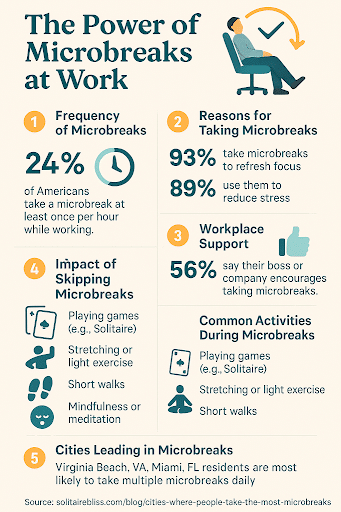
The need for micro-breaks spreads across industries. However, while micro breaks are more popular in some industries, others still have significant room for adoption.
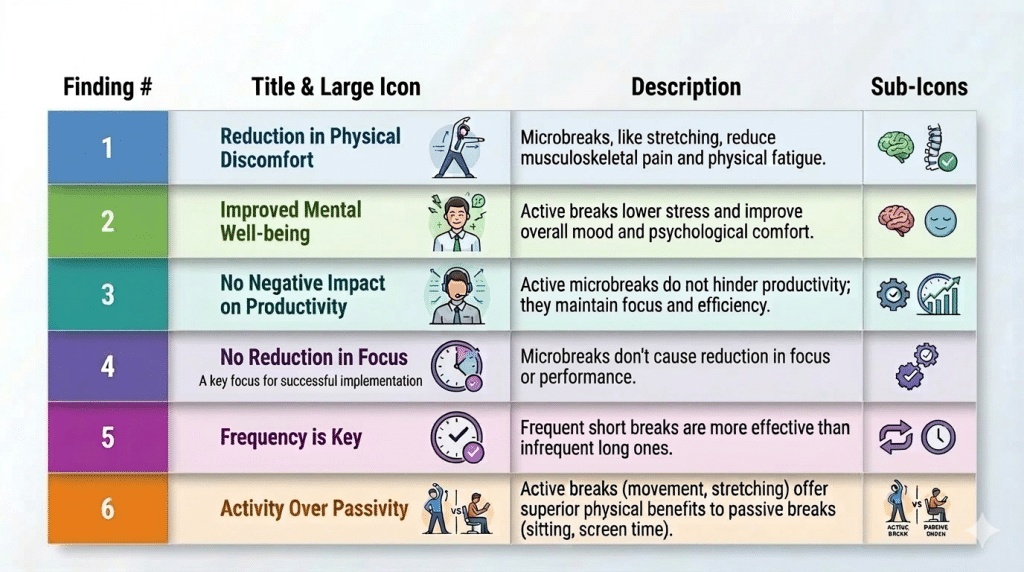
Image Source – Gemini. Data Source
Embedding Micro Wellness Programs into Daily Workflows:
The real power of this approach emerges when it becomes routine. Embedded into daily workflows, these practices strengthen engagement without pulling employees away from their responsibilities. Over time, small actions compound into measurable improvements in energy, morale, and connection.
- Habit stacking: One very effective way to achieve this is habit stacking. This involves attaching a new habit to an existing one. In a corporate setting, this could mean using the first three minutes after a task is completed to practice deep breathing. These prompts serve as gentle reboots for the brain, ensuring the transition between tasks is intentional.
- Repetition: Micro-wellness is built on the principle of repetition. While a one-hour yoga class once a week is beneficial, five minutes of stretching every day creates more significant long-term flexibility and postural health. Focus on small, daily wins.
Rethinking Impact Measurement of Your Company Wellness Program: Small Signals That Tell a Bigger Story
Traditional wellness metrics often rely on infrequent surveys or annual participation rates. Micro-wellness requires a different lens, one that values frequent, lightweight signals over large episodic data points.
- Track how people interact with micro moments: Instead of measuring how many people attended a webinar, track how many people are interacting with the daily initiatives. Is there a high engagement rate with the 3-minute afternoon reset? Are employees participating more on Tuesdays than on Thursdays? Monitoring these trends allows HR to pivot and adjust staff well-being programs in real time.
- Use pulse surveys and polls with a single question: Asking “How is your energy level right now?” can provide immediate feedback on the impact of micro-wellness interventions.
Over time, these small data points can be linked to broader outcomes like reduced absenteeism, higher retention rates, and improved employee Net Promoter Scores (eNPS). When well-being is measured in small increments, the data becomes more accurate and actionable.
For a deeper dive on company wellness programs see our complete guide to strategy, engagement and ROI of wellness programs.
Small Moments, Measurable Gains: Turning Micro Wellness Into Lasting Impact
Micro-wellness succeeds when it’s supported by the right infrastructure. CoreHealth enables organizations to design, deliver, and measure wellness programs that fit naturally into modern workdays. With flexible content, seamless integrations, and real-time analytics, CoreHealth helps HR teams turn brief well-being moments into sustained engagement and meaningful insights.
Ready to make micro-wellness work in your organization’s employee wellness program? Explore how CoreHealth can help by contacting us.

