
Key Takeaways
- Balancing work and caregiving has become one of today’s most pressing employee challenges, and most employee wellness programs fall short.
- Embedding family-focused support into your company wellness programs can increase employee wellness engagement, employee satisfaction, and organizational resilience.
- Creating meaningful caregiver and family-friendly wellness benefits requires a structured, intentional approach that addresses real challenges employees face.
- Modern wellness programs make these insights visible and supply relevant metrics so HR leaders can refine benefits strategy in real time.
Employee wellness is not limited to physical health alone. It extends into the personal domains of caregiving and family well-being. Traditional company wellness programs that focus primarily on fitness challenges or nutrition education may overlook the daily realities of balancing work and caregiving. However, by integrating caregiver and family benefits into an overarching employee wellness program, organizations stand to improve engagement, retention, productivity, and overall workplace culture.
Whether supporting children, aging parents, or family members with chronic illnesses, family caregivers face unique mental, emotional, and logistical demands. These demands can affect job performance, increase burnout, and contribute to higher turnover. A growing body of evidence confirms that employees who feel supported in their caregiving roles are more likely to stay engaged and productive at work. This highlights a critical opportunity for employers to support individuals in meaningful ways by embedding caregiver-friendly resources into health and wellness programs that truly meet workers where they are.
Integrating caregiver support with traditional wellness initiatives also aligns with broader market trends. Expanding wellness strategy beyond classic wellness programs to include systems that ease the burden of life’s pressures strengthens engagement, satisfaction, and organizational resilience.
Why Caregiver and Family Benefits Are Important for Your Employee Wellness Program
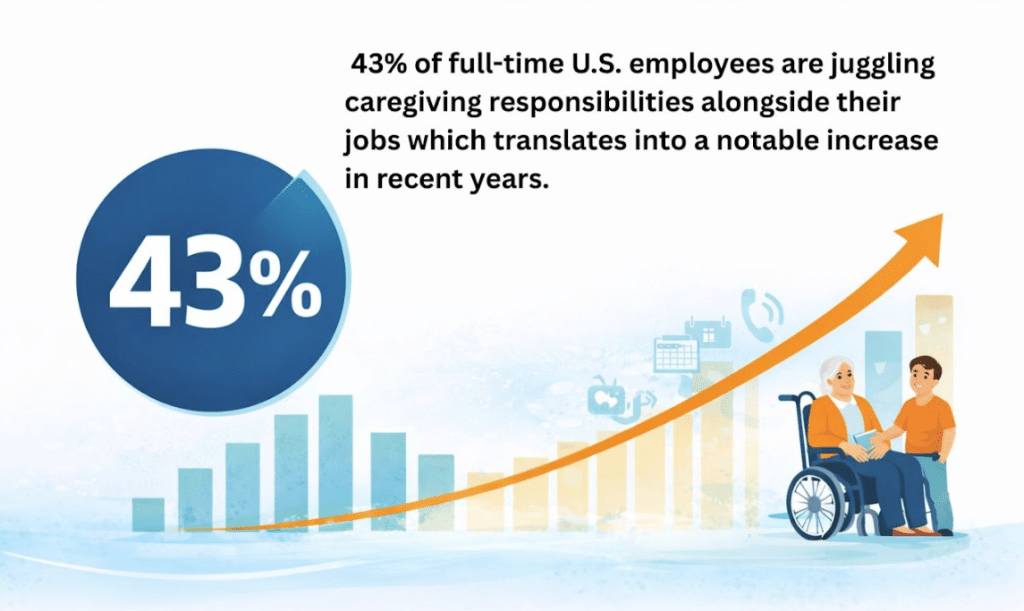
Caregiver responsibilities can heighten stress and decrease employees’ ability to engage in even basic staff well-being programs. According to Guardian’s 2025 From Workforce to “Careforce” report, 43% of full-time U.S. employees are juggling caregiving responsibilities alongside their jobs, which translates into a notable increase in recent years.
Caregivers are more likely to report engagement challenges and wellness challenges due to conflicting work and personal duties. For many caregivers in the workplace, caregiving can feel like a second job — one that comes without structured support.
When employers integrate caregiver benefits, such as flexible schedules, paid caregiving leave, backup care services, family counseling, and financial planning resources, into a unified well-being program, caregivers not only benefit directly but the entire workforce does too. Thoughtful workplace policies signal organizational commitment to employee support, helping employees feel valued while improving morale and reducing absenteeism.
A robust, caregiver-inclusive wellness strategy also creates more equitable workplaces. Historically, caregiving responsibilities disproportionately impact groups that are already at higher risk for burnout and turnover, namely women and underrepresented populations. Crafting company health and wellness programs that support working caregivers demonstrates a commitment to diversity, equity, and inclusion while also addressing workforce challenges in a holistic way.
Designing Caregiver and Family-Friendly Wellness Benefits
A 2024 survey found that 78% of full-time caregivers expect their employer to provide caregiving-related benefits. Creating meaningful caregiver and family-friendly wellness benefits requires a structured, intentional approach that aligns organizational support with the realities staff face outside of work and reflects evolving caregivers’ needs.
Conduct a Health Risk Assessment
To build effective caregiver and family benefits, start with a health risk assessment focused on your workforce’s needs. Integrating assessment data into planning helps identify patterns and shape actionable strategies to support employees managing caregiving responsibilities.
Create Supportive Leave and Flex Work Policies
Flexible work arrangements and caregiving leave are among the most direct ways to reduce caregiver strain. This may include implementing a flexible work schedule or allowing employees to work remotely when appropriate. These are practical steps employers can take to ensure employees can thrive both at work and at home without stigma.
Expand Benefits to Include Family Support
Include benefits such as backup childcare, elder care referral services, and financial planning workshops as components of your employee health and wellness programs. These offerings reduce logistical burdens while enhancing employees’ overall well-being.
Integrate Wellness Software and Digital Platforms
Using wellness software or a corporate wellness platform enables scaling these complex benefits efficiently. Centralized engagement tools help personalize outreach and ensure caregivers can access the resources designed to foster sustained participation and impact.
Address Emotional Health With Counseling and Peer Support
Mental health services and support groups tailored to caregivers help combat isolation and stress. These initiatives reinforce how employers can support emotional resilience through structured programs embedded within broader well-being initiatives.
4 Common Challenges and Solutions for Supporting Caregivers in the Workplace
Even with the best intentions, adding caregiver support to your wellness strategy can create challenges. Understanding and proactively addressing these obstacles ensures organizations develop effective strategies to support employees across various life stages.
Challenge #1: Low Participation in Caregiver Benefits
Employees are not engaging with the available wellness supports.
Solution: Use targeted communication combined with employee engagement tools to raise awareness. Personalize messages based on employees’ life stage and caregiving status, along with integrating reminders in your employee wellness software dashboards.
Challenge #2: Measuring Impact
The outcomes and effectiveness of the organization’s wellness offerings are unclear.
Solution: Pair utilization metrics with outcomes like turnover, absenteeism, or stress survey scores gathered via workplace health risk assessments. A well-configured health risk assessment provides essential context for evaluating progress.
Challenge #3: Overcoming Stigma
Many employees hesitate to use caregiving support out of fear it will be perceived as weakness.
Solution: Address this by normalizing caregiving discussions in leadership communications and embedding caregiver stories into staff well-being programs.
Challenge #4: Balancing Diverse Needs
Although not all employees are caregivers, benefits must serve the entire workforce.
Solution: Designing adaptable programs helps organizations build systems that employers can sustain in the long term.
Caregiver Benefits and Corporate Fitness Challenges
A well-rounded strategy pairs caregiver support with existing wellness components, such as workplace fitness challenges and other health and wellness challenges for the workplace. For example, a month-long “Family Fitness Week” can include family walks, virtual yoga sessions, and at-home fitness options that acknowledge caregiving schedules while encouraging participation and connection.
Likewise, worksite wellness challenges that include team goals for sleep, hydration, or stress management can dovetail with caregiver resources by supporting overall resilience. Themes like these help overcome work wellness challenges and create a culture where health and wellness challenges benefit everyone, including caregivers and non-caregivers alike.
Measuring What Matters
To ensure your caregiver-inclusive strategy is effective, track metrics that illuminate both participation and outcomes. Look beyond simple usage statistics of caregiver benefits, and consider broad workplace well-being indicators such as:
- Engagement in employee wellness features
- Survey responses related to stress or caregiver burden
- Outcomes from health risk assessments
- Participation in wellness activities (fitness, mental health, family events)
- Correlations between caregiving support use and performance or retention
Modern wellness programs make these insights visible. Platforms that blend data from health risk assessment tools, engagement tools, and activity metrics empower HR leaders to refine benefits strategy in real time.
A Unified Wellness Future With CoreHealth
As you build or evolve your employee wellness program, choosing the right technology and partners can make all the difference. With CoreHealth’s corporate wellness platform and integrated wellness software, you can design and manage employee health and wellness programs that support both caregivers and the broader workforce.
CoreHealth’s tools ensure your caregiver benefits are seamlessly woven into comprehensive well-being programs for employees. By leveraging both engagement tools and automation, CoreHealth helps companies overcome workplace wellness challenges and strengthen staff well-being programs across all life stages.
CoreHealth doesn’t just support implementation. It helps you measure impact, refine strategy, and ensure every employee has access to the support they need.
By integrating CoreHealth’s platform into your strategy, you create a unified, data-driven company wellness program that honors the whole employee — at work and at home — making wellness inclusive, measurable, and sustainable.
